
Town of Randolph to Celebrate 200th Anniversary with Bicentennial Kickoff March 7
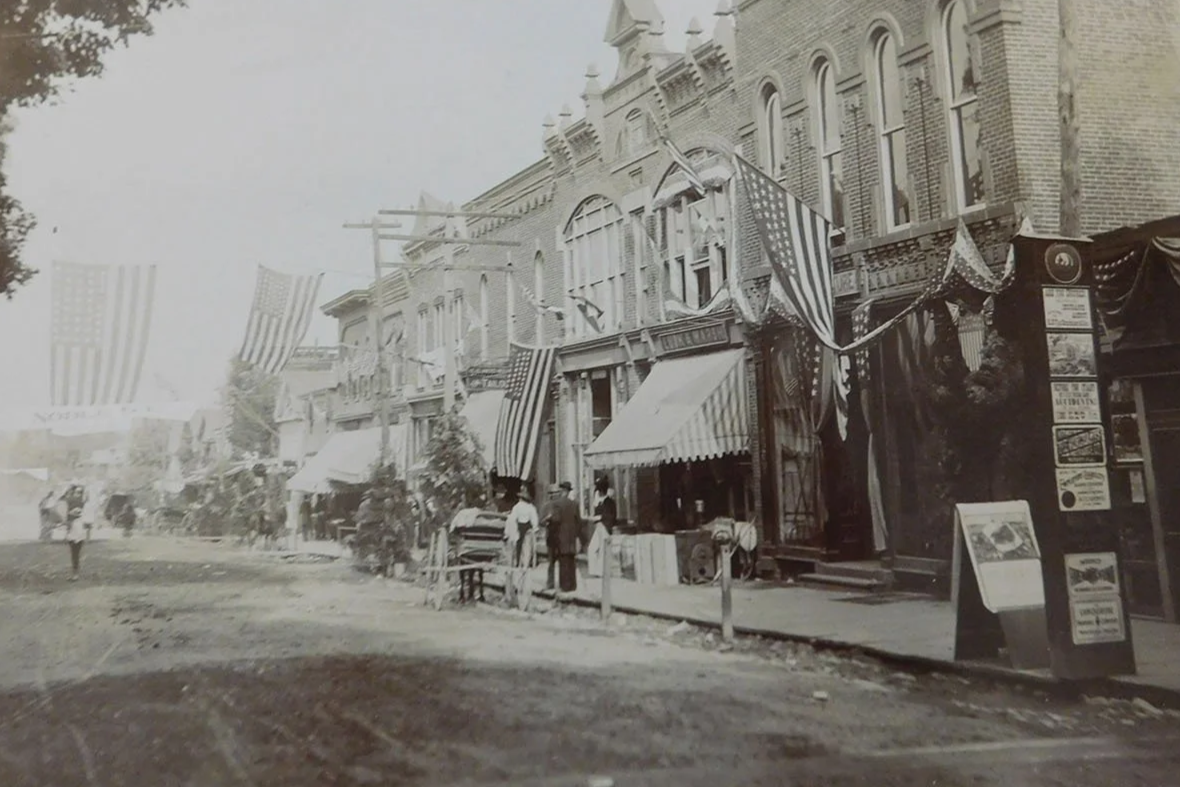
Town of Randolph to Celebrate 200th Anniversary with Bicentennial Kickoff March 7
Community-wide celebration marks 200 years since Randolph’s first town meeting on March 7, 1826.
RANDOLPH - On March 7, 2026, the Town of Randolph will celebrate the 200th anniversary of the organization of the Town by a group of pioneers who had moved into a largely undeveloped section of New York.
Celebration of the bicentennial will begin officially on Saturday, March 7th at 1:00pm at the Town Courtroom in the Randolph Municipal Building at 72 Main Street, recognizing the anniversary of the first town meeting on March 7, 1826. Town officials and other area elected leaders will gather for the Bicentennial Kickoff Proclamation & Celebration.
Earlier that day at 10:00am, the Randolph Library, 26 Jamestown Street, will host the first event in their Bicentennial Speaker Series. Town Historian and genealogist Nancy Olejniczak will present “Discover Your Roots: Genealogy 101.” This workshop will explore the basics of genealogy research with an emphasis on the local area and free resources. Participants will learn how to trace the roots and branches of their family trees, discovering more than just names and dates to understand who their ancestors were.
The first town meeting was the result of an Act of the New York State Legislature one month earlier on February 1, 1826. The Act divided Conewango, creating the Town of Randolph which at that time also included the current Town of South Valley. The Act stated “that the first town meeting shall be held at the house of Benjamin Clark, in said town, on the first Tuesday in March next.”
At the first town meeting, Thomas Harvey, Justice of the Peace, was appointed as moderator. Those assembled chose Jeremiah York as Town Supervisor and Andrew D. Smith as Town Clerk. They also selected assessors, highway commissioners, poor masters, commissioners and inspectors of common schools, a tax collector, and path masters. They voted to raise $100 for road money and to raise “double the amount of school money to what is raised by the state.”
In the early days, town meetings occurred just once per year with business focused on development of roads, operation of schools, and care for the poor.
Plans for future settlement of the region began over 30 years earlier. In 1792-93 the Holland Land Company purchased over three million acres of land in western New York. The company surveyed the land from 1798-1800, dividing it into the system of townships, ranges, and lots which is still used today. The boundaries of the future Town of Randolph were included in this original survey. Cattaraugus County was established in 1808.
On October 30, 1821, Edmund Fuller and four other men completed the first land purchases in the the future town of Randolph with the Holland Land Company. The 1879 History of Cattaraugus County, New York states that Fuller “made the first settlement in 1820, on lot 31, building a log house, which stood near where the cemetery now is.” Perhaps the surroundings didn’t suit him, or maybe due to his pioneering spirit, he sold his land interests in 1822 and moved west.

Others quickly picked up where Fuller left off. Many of these early settlers who developed homesteads were present at the first town meeting and have descendants living in the area today. Others stayed briefly, moving on to new opportunities to the west.
In 1823 the Town of Conewango was established. It then included the current towns of Leon, Randolph, and South Valley and was growing. Movement into western New York accelerated rapidly when the Erie Canal was completed in 1825, drastically reducing the cost of transportation along with travel time into western New York.
By 1826 about 30-40 families had purchased land and settled within the boundaries of the future Town of Randolph. Thomas Harvey took over the Fuller property and succeeded Jeremiah York as Town Supervisor. The county history reports, “Two of his daughters married David Salisbury and Clement Russell, also early settlers, in 1824, and these were the first marriages in town.” Harvey hosted the first Methodist meetings in the town.
Benjamin Clark, who hosted the first town meeting, moved to Pennsylvania, selling his property to Joel Scudder. Otis Hitchcock established his homestead in the area on the current Caswell Road. Hitchcock hosted the preliminary meeting of the first religious meeting in the town in 1825, which led to the organization of the Baptist Church of Randolph at the home of Solomon Nichols.
Current roads and streets bear the names of other early settlers including Archer, Bowen, Bush, Caswell, Crowley, Sample, and Torrance. These and other families cleared land for their homes and farms and established the first businesses including sawmills and public houses or taverns. The early sawmills developed into a thriving timber and lumber industry.
By 1830 when the first census of the Town of Randolph was taken, the Town had grown to about 135 households with a total population of 776 people. Children were educated at district schools. More development would quickly follow. The 1840 census shows that the population had grown to 1,282. In 1847 the Town of Randolph was divided with the southern half becoming the Town of South Valley.
Randolph’s Bicentennial Kickoff is being held in conjunction with “March Into Randolph.” Along with encouraging shopping and dining at local businesses on March 7th, the Randolph Area Community Development Corporation will host a craft and vendor fair from 10:00am-4:00pm at the Randolph Fire Hall and Municipal Building Community Room.
The Bicentennial Kickoff and March into Randolph provide a great opportunity to explore Randolph’s
history along with what the town has to offer today. Throughout the year the Bicentennial Committee will provide opportunities to learn more about the history of the Town of Randolph.