
Not an Average Birthday Celebration: Reflecting on America's 250-Year Journey
Not an Average Birthday Celebration: Reflecting on America's 250-Year Journey
As America marks its 250th birthday, this thoughtful reflection explores how everyday life has evolved since 1776—highlighting the remarkable innovations, sacrifices, and milestones that continue to shape the nation today.
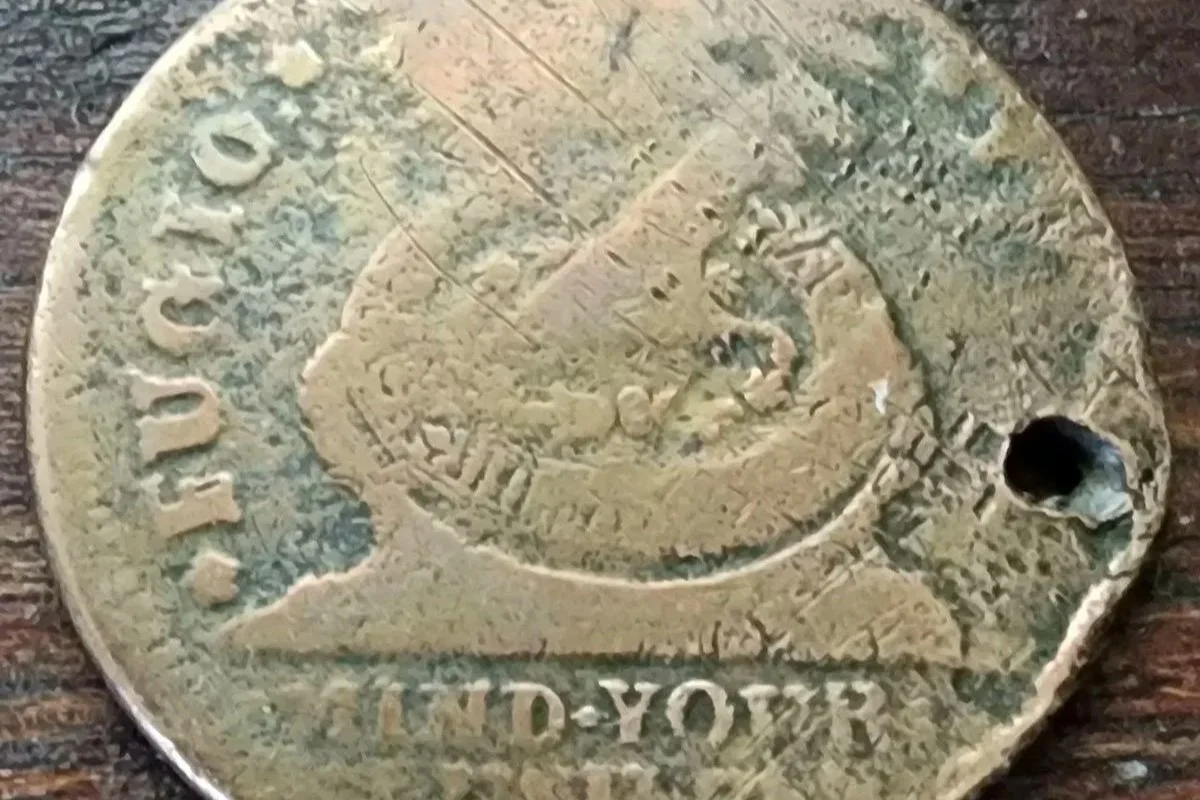
I found this photo in a 7/2/25 Substack by Chester H. Sunde, Psy.D. It says “Fugio” and “Mind your business” It’s the (Ben) Franklin cent authorized by the Continental Congress in 1786. It was the first official coin sanctioned by the U.S. Government. The Latin phrase tempus fugit (“time flies”) was popularized by Horace (65–8 BC), a Roman poet; it appears in ancient Chinese texts and was likely carved in stone from the beginning of fleeting time. The concept is universal and one that affects each one of us. And now, here we are, celebrating 250 years from the very day our forefathers gave us America the Beautiful. Time flew, indeed.
Back in 1776 when perhaps some of your own ancestors inhabited North America, time flew for them just as it does for us today. Even more so. In those early days they lived by daylight and candlelight. When the waning daylight season hit after summer solstice, those settlers had to capture every minute of daylight for work, schooling and household/social activities. Time flew because it was attached to daylight.
A search through Google provided information for us to compare life 250 years ago and life today: When the sun set in 1776, life came to a standstill for the most part, especially for the common folk who couldn’t afford luxuries like beeswax candles. If they needed illumination, rags soaked in animal oil on a metal plate might be lit, or tallow candles made from animal fat, and for the more fortunate, spermaceti candles made from oil of the sperm whales’ heads. Imagine the smell. Light was truly a luxury.
Just over 100 years later, in 1882, Thomas Edison opened a power station in NYC and by 1930, 7 in 10 homes were fully electrified. And today, we have alternatives like windmills and solar cells, nuclear power, lithium batteries, the use of AI, and we are even exploring geothermal heat sources for optimizing electric power.
Back to 1776… Our ancestors ate quite differently than we do today. They farmed and grew staple crops, but when winter arrived, they had to rely on their resourcefulness and knowledge about food preservation. They dry salted, brined, or smoked every bit of meat for winter storage or to feed the soldiers on the front. Fruits and veggies were air, sun or oven dried. Veggies were also pickled or fermented and hard boiled eggs or meats might be submerged in lard or butter to block out air. There were root cellars, of course, and sugar preservation (jams) for those persons of means, but no Ball screw top jars until 1858.
Native Americans taught our ancestors about growing corn which saved them through many harsh winters, adding corn pudding, jenny cakes and corn dumplings to their meals. In early- to mid-1800s, the icebox came on the scene, followed by the first plug-in refrigerator (the Domelre) in 1913. Today, we have AI watching dates on our refrigerated food, refrigerator kitchen assistants with built-in barcode scanners, specialty icemakers, and smartphones connecting to our refrigerators so we can check inventory and not overbuy. Of course, in 1776 overbuying was a concept our ancestors could never fathom. But Washington and Jefferson did have ice houses (and slaves to manage them.
1776 childhood mortality in America was off the charts. Without vaccines and antibiotics, stillbirth, childhood diseases, and accidents took the lives of 40% of children aged 5 and under. A walk through an old cemetery provides clear evidence of how infant mortality was part of their lives. These numbers skewed life expectancy rates in 1776 overall to 35-38 years. However, if individuals made it to age twenty, they could likely survive into their 60’s and 70’s. Consider Ben Franklin and Thomas Jefferson who both lived to 84 and 83, respectively. Today’s life expectancy in America is roughly age 79, and approximately only 0.6% of children die by the age of five. Daily showers, advances in science, revolutionary surgery, dental care - unlike the care Gen. George Washington, The Father of our Country could get - advanced vaccines, and access to every day pharmaceuticals changed lives. Finally in late 1800s municipal water treatment, sewage management, and food and milk inspections became part of daily living. I remember getting ether for a medical procedure “back in the day” but we now enjoy safe surgical anesthesia, polio vaccine changed lives across the globe, and health care revolutions took place in the mid-twentieth century. Lately, with the onslaught of immense heat throughout most of America, we would not have minded an early 1800 visit to Monticello where the Washingtons served ice cream on their breezy piazza, opened the cupula to regulate airflow, or perhaps he’d invite you to sit in his fan-chair.
Two hundred fifty years have flown by, but hopefully this walk back to 1776 gives us a greater appreciation for some of the things we take for granted. Imagine going back once again in time yet arriving at the 1776 homestead in our SUV, smartphone in hand inviting them to make a Zoom call to their relatives in England and doing a screen grab to print on our portable printer to leave them a memento. We might take out our computer and try to explain the magic of transistors with the help of Google, comparing a teeny tiny transistor to a water tap which, when turned on or off could control the flow of a mighty river. Imagine this, we tell our ancestor: 10 billion to several trillion transistors can fit on the area of a pinhead. Could they even grasp what we don’t think twice about? Or the satellites that keep sending information to earth?
As we look at their eight children and show them pictures on our phones of our small family (and explain about contraception), we might remark about how we now know their DNA has determined so much about them from eye and hair color, height to their talents and dispositions. Just be careful they don’t think of burning you at the stake after that conversation. Of course, we’ll show them photos of us in the plane on our flight to England or more unbelievably, Africa, and photos of rockets and Neil Armstrong walking on the moon.
When asked where we live, we might mention having more than one home: a condo in Ellicottville or Florida, our boat, and our small plane to take us from one home to the other.
Seeing the ladies read the Bible, quilt and sew for entertainment, we surely shocked them when talking about women CEOs of big companies, women athletes and (gasp!) women preachers! We’d share how Ellicottville is a winter snow skiing town and they might immediately acknowledge their use of snowshoes but would not at all understand the insane concept of attaching wood staves to their feet and plummeting downhill at breakneck speeds.
In order to write this piece, I asked friends and family for their thoughts about the most important things that happened or were developed in America in the last 250 years. My granddaughter came up with one of the craziest: people emptying store shelves of toilet paper during COVID. Kids! Before you move on to the next article, I encourage you to give some thought to things that have changed in America over the last 250 years. Arts, science, racial equality or inequality, women’s rights or lack thereof, the zipper, dialysis, robotic probes, (we haven’t achieved every Miss America’s dream - world peace yet, so leave that out), The A-Bomb (did it slow the number of world wars?), conservation awareness (are we better or worse?) and more. Meanwhile, celebrate your life in America, the sacrifices made by all who came before us and find 250 things (make a list - good therapy in these chaotic times) that make you grateful you are an American.
Happy 250th Birthday, America! And may the next years not fly by so quickly.